
Are you planning the Everest Three High Passes Trek? Then you have chosen the ultimate high-altitude circuit in Nepal. The trek links Kongma La (5,535 m), Cho La (5,420 m), and Renjo La (5,360 m). It also includes Everest Base Camp (5,364 m), Kala Patthar (5,545 m), and the turquoise Gokyo Lakes. Many consider it the finest teahouse loop in the Himalayas.
Once you commit, one big question follows. Should you trek the route clockwise or anticlockwise?
Both directions cover the same trails, valleys, and four 8,000-meter peaks: Mount Everest, Lhotse, Makalu, and Cho Oyu. However, the direction changes your acclimatization profile. It also changes the order of the passes and how your body handles fatigue over 18 to 20 days. This practical guide will help you decide.
Table of Contents
Understanding the Two Routes
Both routes start the same way. You first acclimatize in Namche Bazaar (3,440 m). After that, they split.
The Anticlockwise Route Itinerary (East to West)
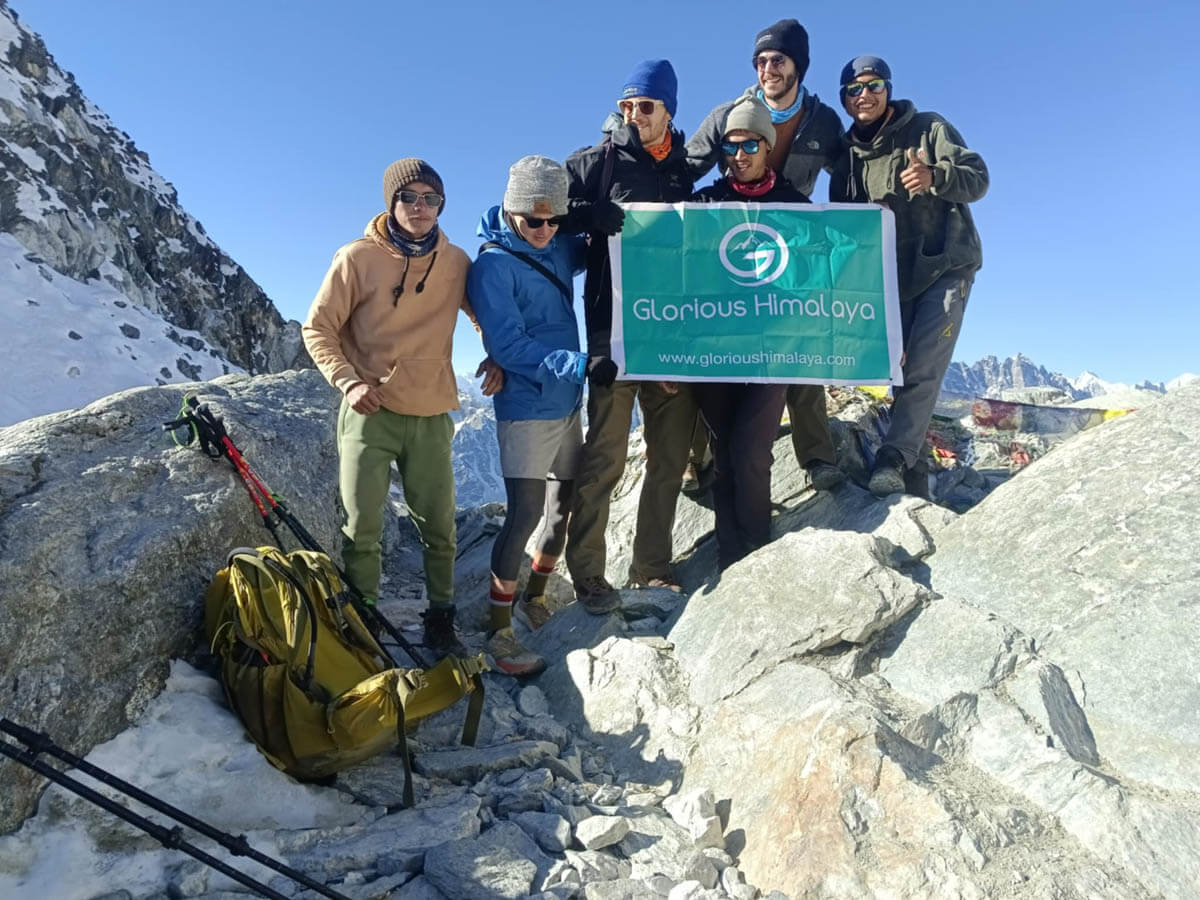
Day 1: Flight to Lukla and trek to Phakding
Day 2: Trek from Phakding to Namche Bazar
Day 3: Hike to Hotel Everest View on Our Acclimatization Day
Day 4: Trek from Namche Bazaar to Tengboche
Day 5: Trek from Tengboche to Dingboche
Day 6: Trek from Dingboche to Chhukung
Day 7: Hike to Chhukung Ri
Day 8: Trek from Chhukung to Lobuche via Kongma La Pass (5,535m)
Day 9: Trek from Lobuche to Everest Base camp (5,364) and back to Gorakshep (5,170m) for overnight stay
Day 10: Hike from Gorakshep to Kalapather (5,545m) and trek down to Lobuche
Day 11: Trek from Lobuche to Dzongla
Day 12: Trek from Dzongla to Gokyo via Cho La Pass (5,420m)
Day 13: Hike to Gokyo Ri
Day 14: Trek from Gokyo to Marlung via Renjo La (5,360m)
Day 15: Trek from Marlung to Namche Bazar
Day 16: Trek from Namche Bazaar to Lukla
Day 17: Fly back to Kathmandu
- From Namche, you head east up the classic Khumbu Valley.
- You pass through Tengboche, Dingboche, and Chhukung (4,730 m).
- The pass order is Kongma La → Cho La → Renjo La.
- You visit Everest Base Camp and Kala Patthar in the middle of the trek.
- You finish through the Gokyo Valley, Marlung, and Thame.
The Clockwise Route Itinerary (West to East)
Day 1: Fly to Lukla (2846m) and trek to Phakding
Day 2: Trek to Namche Bazaar from Phakding
Day 3: Acclimate day at Namche – Hike up to Hotel Everest View
Day 4: Trek to Thame from Namche Bazaar
Day 5: Trek to Lungde from Thame
Day 6: Acclimatization day
Day 7: Trek to Gokyo via Renjo La Pass (5360m) from Lungde
Day 8: Hike up to Gokyo Ri for surreal Gokyo valley view
Day 9: Trek to Thangnak from Gokyo
Day 10: Trek to Dzongla via Cho La Pass (5420m) from Thangnak
Day 11: Trek to Lobuche (4910m) from Dzongla
Day 12: Trek to Everest Base Camp (5364m) then return to Gorakshep for overnight stay
Day 13: Hike to Kala Patthar (5545m) and then descend to Lobuche
Day 14: Trek to Chhukung via Kongma La Pass (5535m) from Lobuche
Day 15: Trek to Tengboche from Chhukung
Day 16: Trek to Monjo from Tengboche
Day 17: Trek to Lukla from Monjo
Day 18: Fly back to Kathmandu or Ramechhap from Lukla
- From Namche, you turn west into the quieter Bhote Koshi Valley.
- You head toward Thame (3,820 m) and Lungden (4,380 m).
- The pass order is Renjo La → Cho La → Kongma La.
- You visit the Gokyo Lakes early.
- You save Everest Base Camp and Kala Patthar for the final part.
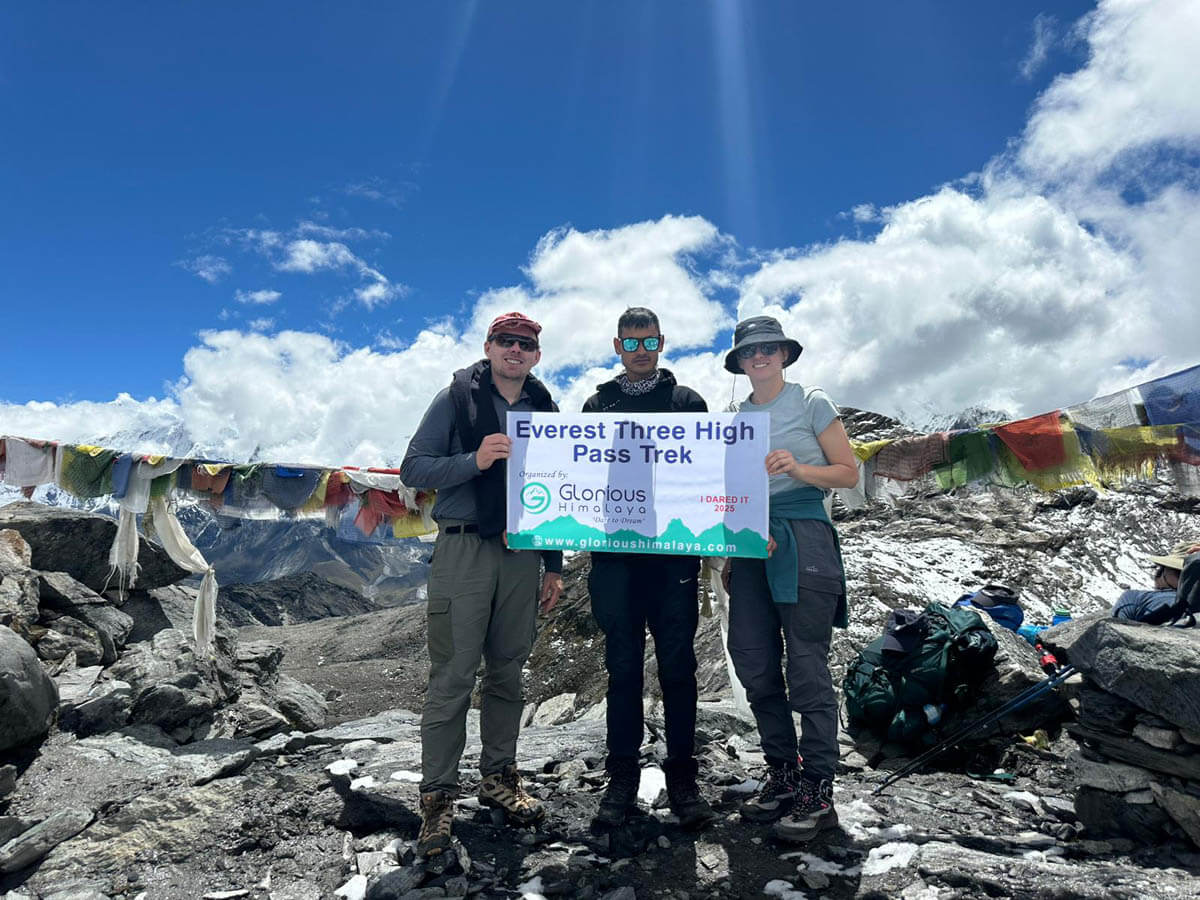
Head-to-Head Comparison
| Feature | Anticlockwise Route | Clockwise Route |
|---|---|---|
| Order of High Passes | 1. Kongma La (5,535 m) 2. Cho La (5,420 m) 3. Renjo La (5,360 m) | 1. Renjo La (5,360 m) 2. Cho La (5,420 m) 3. Kongma La (5,535 m) |
| Acclimatization Runway | Gradual and well tested (Namche + Dingboche/Chhukung) | Faster ascent (fewer overnight stops before the first pass) |
| First Pass Difficulty | Highest and longest pass first, while your legs are fresh | Lowest and least technical pass first |
| Trail Traffic | Moves with the main flow of Three Passes trekkers | Moves against the main flow, with quieter early days |
| Weather Backup | Reaches EBC even if snow closes the high passes | Must cross Renjo La and Cho La before reaching EBC |
| Overall Recommendation | Best for most trekkers | Best for experienced high-altitude trekkers |
Why Most Trekkers Choose the Anticlockwise Route
Roughly 80–85% of guided and independent trekkers go anticlockwise. This includes our standard 19-day Everest Three High Passes Trek. There are four strong reasons why it has become the gold standard in the Khumbu.
1. Better Acclimatization Before Your First 5,300 m+ Pass
Altitude is the biggest factor in completing the Three Passes safely. The anticlockwise route follows a proven, gradual elevation ladder:
- Two nights in Namche Bazaar (3,440 m) & Chhukung (4,730 m)
- Overnight stops in Tengboche (3,860 m) & Dingboche (4,410 m)
- Warm-up hikes to Everest View Hotel and Chhukung Ri (5,546 m)
By the time you reach Kongma La, your body has had plenty of time to adapt to the thin air.
2. Tackling the Hardest Pass on Fresh Legs
Kongma La (5,535 m) is the highest and most demanding of the three passes. The crossing is long and remote, over glacial moraine between Chhukung and Lobuche. There are no teahouses along the way.
Going anticlockwise lets you face this toughest day early, while your energy is high. You do not have to face it at the end of a grueling three-week trek.
3. A Rewarding Progression of Scenery and Difficulty
After Kongma La, you stand at Everest Base Camp and Kala Patthar. Then you cross the glaciated Cho La Pass (5,420 m) into the serene, emerald-blue Gokyo Lakes.
Your final pass, Renjo La (5,360 m), offers one of the greatest panoramic views in Nepal. You look back across the Ngozumpa Glacier toward Everest, Lhotse, Makalu, and Cho Oyu. A peaceful cultural descent follows through traditional Sherpa villages such as Thame.
4. Weather conditions for Everest Base Camp
Himalayan weather is unpredictable. This is true even in the peak seasons of spring (March–May) and autumn (September–November). Heavy snow can temporarily close the high passes.
If you trek anticlockwise and weather forces you to skip a pass, you can still reach Everest Base Camp and Kala Patthar by the main valley trail. On the clockwise route, an early snowstorm on Renjo La or Cho La can stop you from reaching EBC altogether.
When Does the Clockwise Route Make Sense?
The anticlockwise route is safer and smoother for most trekkers. Still, the Clockwise Three High Passes Trek route has a loyal following among experienced Himalayan trekkers. Here are the main reasons.
- Starting with the “easier” pass: Renjo La (5,360 m) has stone steps on the Gokyo side. It does not require a glacier crossing. This makes it less technically intimidating than Kongma La as a first pass.
- Immediate solitude: On Day 4, you leave the busy Everest Base Camp trail and head toward Thame and Lungden. You are immersed in quiet Sherpa heritage right away.
- An EBC finale: If your emotional goal is to finish at Everest Base Camp and Kala Patthar, the clockwise route saves these landmarks for the end.
Note: The clockwise route reaches Lungden and Renjo La quickly. You should therefore add an extra acclimatization day in Thame or Lungden. This keeps you from gaining elevation too fast.
The Verdict: Which Direction Should You Pick?
Choose the Anticlockwise Route if:
- This is your first time trekking above 5,000 meters.
- You want the safest and most gradual acclimatization schedule.
- You prefer to finish the hardest pass, Kongma La, while you are fresh.
- You want guaranteed access to Everest Base Camp, whatever the pass conditions.
Choose the Clockwise Route if:
- You already have strong high-altitude experience.
- You want to ease into the circuit with Renjo La first.
- You are comfortable adding an extra rest day on the western side to acclimatize.
Whichever direction you choose, allow 18 to 20 days in total. Train consistently for steep uphill and downhill days. Trek with an experienced local Sherpa guide, who knows how to read changing snow and glacier conditions on the passes.
FAQs
Which direction is better for acclimatization on the Everest Three High Passes Trek?
The anticlockwise route offers a more gradual acclimatization profile. After leaving Namche Bazaar (3,440 m), you ascend steadily through Tengboche, Dingboche, and Chhukung (4,730 m). Dedicated rest days and warm-up hikes are included along the way. Then you cross your first 5,300 m+ pass, Kongma La.
The clockwise route reaches high altitude faster via Thame and Lungden. An extra acclimatization day is strongly advised.
Which of the three passes is the hardest?
Kongma La (5,535 m) is the hardest pass among the three high passes. The crossing is long and rugged, over glacial moraine. There are no teahouses along the route.
Cho La (5,420 m) is technically challenging. It crosses a glaciated section. Depending on snow conditions, you may need microspikes or crampons.
Renjo La (5,360 m) is the lowest and least technical of the three.
Does the clockwise or anticlockwise route have better mountain views?
Both directions cover the same trails and viewpoints. These include Kala Patthar, Gokyo Ri, Everest Base Camp, and all three passes. You will not miss any scenery either way.
However, many trekkers prefer the anticlockwise direction. It ends with Renjo La, where you look back from the top across the Ngozumpa Glacier. The panoramic wall of Everest, Lhotse, Makalu, and Cho Oyu spreads out before you. It is a fitting finale to the trek.
What happens if snow closes one of the passes during my trek?
On the anticlockwise route, you visit Everest Base Camp and Kala Patthar first, via the main Khumbu Valley. This happens before you cross Cho La or Renjo La. Heavy snow on the passes will therefore not stop you from reaching EBC.
On the Everest Three High Passes clockwise route, early snowfall on Renjo La or Cho La can block access to the Everest Base Camp side of the circuit. You may then have to backtrack via Namche Bazaar.
How many days do I need for the clockwise vs. anticlockwise itinerary?
Most trekkers complete the anticlockwise route in 16 to 17 days (Kathmandu to Kathmandu). The clockwise route usually takes 18 to 20 days. The extra time allows proper acclimatization before Renjo La.
We also recommend adding 1–2 buffer days at the end of your trip. These cover possible Lukla flight delays.
Can I do the Everest Three High Passes Trek without a guide?
We strongly recommend trekking with a licensed local Sherpa guide. This circuit crosses remote, glaciated passes above 5,300 meters. Trails can disappear under fresh snow.
A guide helps with route-finding, weather assessment, and altitude safety. This also follows Nepal’s updated trekking safety regulations.


